 VENTEEVE
A slow leak is the worst kind. A burst pipe you deal with immediately, because there is water coming through the ceiling and a man in a van already on his way. A slow leak you live with for two years. Nothing looks wrong. The floor is a little soft in one spot. Then somebody lifts a board.
Your phone is the slow leak.
Nobody Puts Missed Calls on the P&L
Here is the thing about a call you didn't answer: it leaves no evidence. No line item. No invoice you failed to send. No angry email. The woman who rang your salon at 6:40pm, got voicemail, and booked somewhere else the next morning appears nowhere in your accounts. From the inside, that looks exactly like a quiet Tuesday.
The data says the quiet Tuesday is not quiet. A 2024 study by 411 Locals tested 85 businesses across 58 industries by simply calling them during working hours. Only 37.8% of calls were answered by a live person. Another 37.8% went to voicemail. And 24.3% — close to a quarter — just rang out. No answer, no voicemail, nothing.
Invoca, which tracks inbound calls for home services businesses at scale, found 27% of calls to those businesses go unanswered. Not because anybody is lazy. Because the technician is under a sink and the phone is in the van.
The Caller Does Not Ring Back
This is the part that turns a missed call into lost money rather than delayed money.
According to PATLive, 85% of people whose call goes unanswered never call back. And voicemail is not the safety net everyone assumes — Invoca's own platform data shows fewer than 3% of callers pushed to voicemail leave a message. For the overwhelming majority, the trail just ends. You never find out they existed.
Speed is the whole game. A Harvard Business Review study by MIT's James Oldroyd, built on more than 15,000 leads and 100,000 call attempts, found that responding within five minutes made a business 100 times more likely to make contact and 21 times more likely to qualify the lead than responding at the thirty-minute mark. Thirty minutes. Not thirty hours.
And people really do phone. Invoca's buyer experience research found 62% of consumers call before making a purchase, and 76% will stop doing business with a company after a single bad experience. Ringing out at 6:40pm is a bad experience. It just doesn't feel like one from your side, because you weren't there.
So What Is It Actually Worth In Your Pocket
The honest answer is that it depends entirely on your numbers, and almost nobody knows theirs.
The figure that gets quoted most — roughly $126,000 a year for the average small business, per an estimate from AMBS Call Center — makes a good headline and a fairly useless planning tool. It is an average of businesses that are nothing like yours.
Your number is simpler than that, and it is built from four things you already know: how many calls you miss in a typical week, how many land outside business hours, what an average customer is worth, and what share of the people you actually speak to become customers. Multiply it out and the leak stops being a vague feeling and becomes a figure with a dollar sign in front of it.
Take Invoca's own worked example: a furnace replacement averaging $4,500 at a 20% margin is about $900 of profit on one job. Miss two of those a month and you are not having a busy quarter. You are down more than $20,000 a year, silently, with nothing on paper to show for it.
Two Minutes, No Card, and an Actual Number
Most audits that will work this out properly for you arrive with an invoice attached. This one doesn't, because the number is the entire argument and I would rather you just had it.
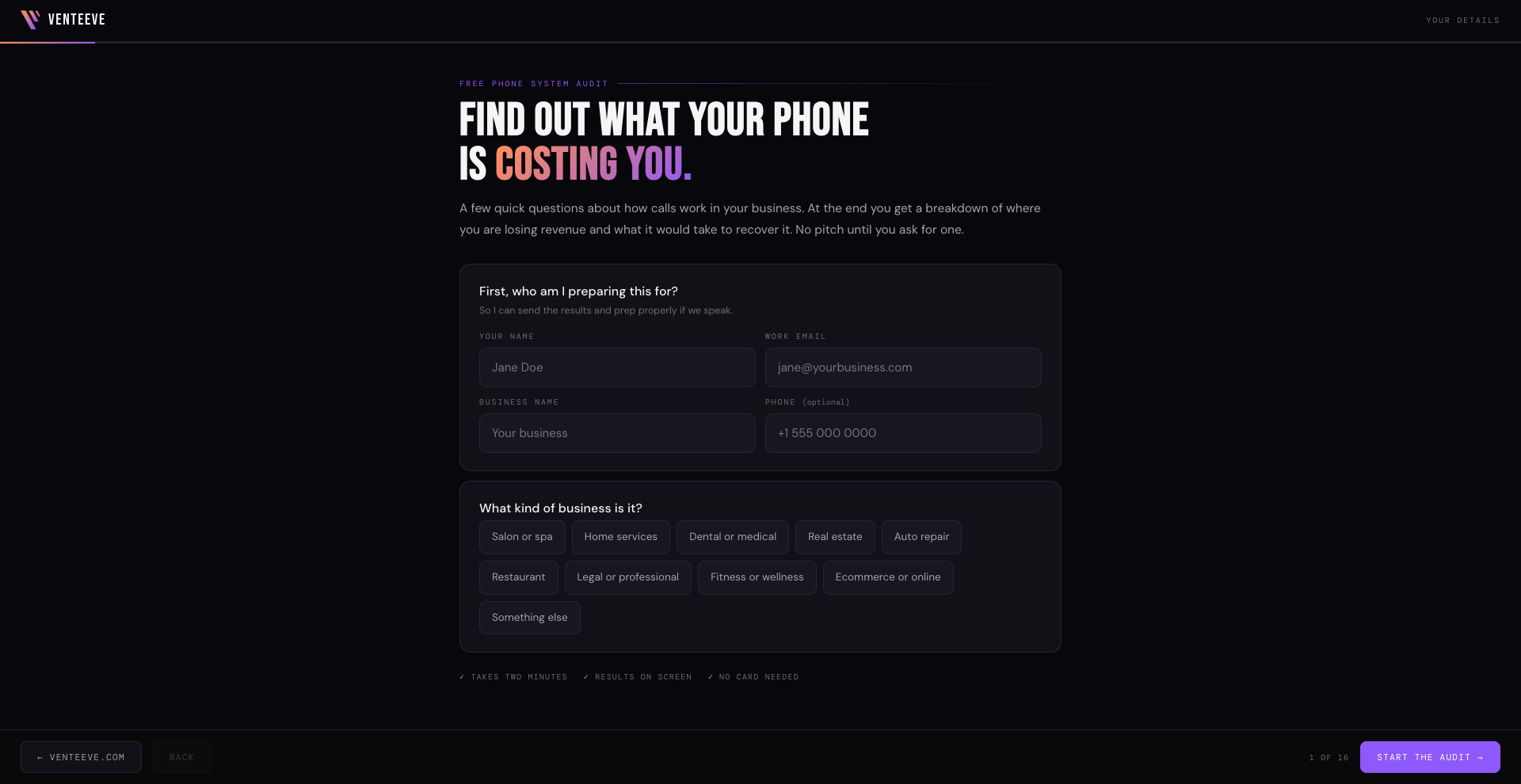
There is a free phone system audit on this site. It walks you through it step by step: who answers your calls today, what happens when nobody does, how many you miss in a week, how fast a new lead hears back, what a customer is worth, your close rate. Sixteen short screens, about two minutes, no card.
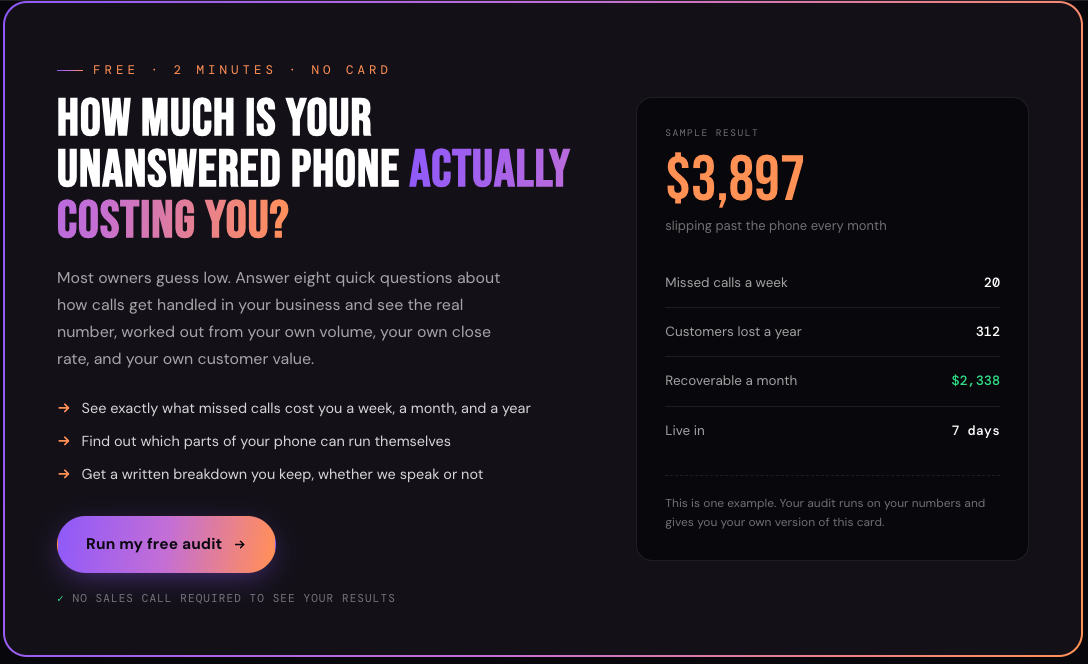
What comes out is a full report. What is walking out the door per week, per month and per year. How many customers a year that adds up to. What is sitting untouched in your old customer list, and what one campaign through it would be worth.
And then the part I care about most: a screen where you set the recovery rate yourself. If you think an AI agent would realistically save only six in ten of those missed calls, put in six in ten. The report recalculates around your scepticism instead of around my marketing. No sales call required to see any of it.
If the number comes back small, you have lost two minutes and gained the certainty that your phone is fine. Go and enjoy your afternoon.
And if it isn't small, the fix is a week rather than a quarter. Day one is kickoff — your scripts, your offer, your calendar, your tone. Days two to five, the agent gets built and tested while you do nothing. Days five to seven, you listen to real test calls and sign off before a single customer hears it. Seven days from knowing the number to closing the gap.
But the number comes first, and it costs nothing.